
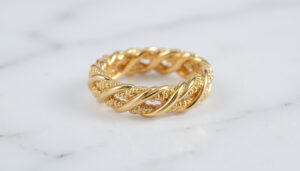
Luxury gold rings inspired by Bahraini artisan craftsmanship carry centuries of heritage in every curve and detail. Bahrain has long been a center of fine metalwork in the Gulf, and today that tradition lives on in rings that blend ancient technique with modern elegance. Whether you are buying your first statement piece or adding to a treasured collection, understanding what makes these rings special helps you choose with confidence. This guide walks you through the history, styles, and key quality markers that define truly exceptional gold rings from this region.
The Heritage Behind Bahraini Gold Craftsmanship
Bahrain sits at the heart of a trading civilization that dates back thousands of years. Merchants, pearl divers, and skilled artisans shaped a culture where gold was not just wealth. It was identity, status, and beauty. Goldsmiths in Bahrain passed their methods from generation to generation, refining techniques that combined filigree work, granulation, and hand engraving into pieces that told stories.
Filigree is the art of twisting fine threads of gold into delicate, lace-like patterns. Granulation involves fusing tiny gold beads onto a surface to create texture and depth. Both methods require exceptional patience and skill. When you hold a ring crafted using these traditional techniques, you feel the difference immediately. The weight is purposeful, the finish is smooth, and the detail is precise.
This heritage gives Bahraini-inspired rings a character that mass-produced jewelry simply cannot replicate. Every piece reflects a human hand, a trained eye, and a deep respect for the material. That is what separates artisan gold from ordinary gold.
Today, jewelers across Bahrain draw on this heritage while adapting to contemporary taste. You find rings that pair ancient motifs like palm trees, geometric stars, and crescent shapes with clean, modern lines. The result is jewelry that feels timeless rather than dated, relevant to a woman who values both culture and style.
Understanding this background helps you appreciate why certain rings command a higher price. You are not just paying for gold by weight. You are investing in skill, time, and a living tradition that connects you to something much larger than the piece itself.
At Sohan Jewellers, the collection reflects this philosophy. Each ring is chosen for its craftsmanship and its ability to carry meaning beyond mere decoration.
Types of Gold Used in Artisan Rings
Gold purity matters, and knowing how to read it saves you from confusion when you shop. In Bahrain, gold is measured in karats (often written as K or kt). Pure gold is 24K, which means 100 percent gold. However, pure gold is too soft for everyday wear, so jewelers mix it with other metals to add strength.
18K gold contains 75 percent gold and 25 percent other metals such as silver, copper, or palladium. It offers a rich, warm color and strong durability. Most luxury artisan rings use 18K gold because it balances beauty with practicality. You get a deep, lustrous finish that holds up well against daily contact.
21K gold contains 87.5 percent gold and is very popular in Gulf countries including Bahrain. It has a slightly more intense yellow tone that many women in the region prefer. It is softer than 18K but still durable enough for rings worn on special occasions. If you love that vivid, warm gold color that is characteristic of Gulf jewelry, 21K is worth considering.
22K gold, at 91.7 percent purity, is even softer and often used for ceremonial or bridal pieces rather than everyday rings. The color is stunning, but the ring needs more careful handling.
Rose gold and white gold also appear in Bahraini-inspired designs. Rose gold gets its pink tone from a higher copper content and pairs beautifully with traditional geometric patterns. White gold is rhodium-plated yellow gold that gives a silver-like finish while maintaining gold’s value and warmth.
Always ask for the karat stamp when you purchase. Genuine artisan pieces will carry a hallmark that confirms purity. This small detail is your guarantee of quality and fair value.
Signature Styles and Design Motifs
Bahraini artisan rings feature recurring motifs that carry cultural meaning. The crescent and star appear frequently, referencing Islamic heritage and the night sky that guided ancient sailors. Geometric patterns using triangles, diamonds, and interlocking shapes reflect the mathematical precision valued in Islamic art.
Floral motifs, especially the lotus and the palm, also feature prominently. The date palm is the national symbol of Bahrain and appears in jewelry as a proud cultural reference. These motifs are not decorative afterthoughts. They are intentional choices that connect the wearer to a rich visual language.
Stack rings are another popular style. These are slender bands designed to be worn together, creating a layered look on a single finger. Each band might carry a different texture or pattern, such as twisted rope, hammered finish, or fine engraving. Together, they build a statement. Individually, each band is refined and elegant.
Solitaire rings with large center stones set in artisan-style prong or bezel settings combine classical jewelry design with Bahraini craftsmanship. The setting itself becomes the art, with hand-engraved details on the shank and shoulders of the ring.
Cocktail rings are bold, oversized pieces meant for evenings and celebrations. These often feature large colored gemstones such as rubies, emeralds, or sapphires surrounded by hand-set diamonds and framed by intricate gold scrollwork. A cocktail ring makes a clear statement: this wearer knows quality, and she is not afraid to show it.
How to Choose the Right Ring for Your Hand
Ring shopping becomes much easier when you match the style to your hand shape and finger length. Women with long, slender fingers can wear almost any ring style well, including wide bands and large statement pieces. Women with shorter fingers often find that elongated designs, such as oval or marquise shapes, create a flattering visual effect.
The width of the band also matters. A wide band shortens the appearance of a finger, while a narrow, delicate band adds length. If you have small hands, very large or chunky rings can overpower your frame. A medium-sized piece with intricate detail often looks more impressive than a huge but plain design.
Consider how the ring fits with your daily activity. If you use your hands frequently, a low-profile setting with the gemstone sitting close to the band reduces the risk of knocks and scratches. Prong settings hold stones securely but sit higher, which means more exposure. Bezel settings wrap the stone in a metal rim, offering maximum protection.
Think about which finger you plan to wear the ring on. Index finger rings tend to be bolder and more dramatic. Middle finger rings can carry wider bands with ease. The ring finger traditionally holds engagement and wedding rings, but there is no rule against wearing a beautiful artisan piece there for everyday joy.
Your skin tone also plays a role. Yellow gold glows beautifully against warm, olive, and dark skin tones. White gold and rose gold complement cooler or fair skin tones. This is not a strict rule, but a useful starting point when you cannot decide between metals.
Caring for Your Gold Ring
Artisan gold rings deserve careful maintenance to keep them looking their best. The good news is that gold care is straightforward once you know the basics. Store your rings separately in a soft pouch or a lined jewelry box. Gold can scratch other metals and gemstones, and other materials can scratch it in return.
Clean your ring regularly using warm water, a few drops of mild dish soap, and a soft toothbrush. Gently scrub around the setting and along the band. Rinse thoroughly and pat dry with a soft cloth. Avoid leaving rings in standing soapy water for long periods, as this can loosen prong settings over time.
Remove your ring before applying hand cream, perfume, or hairspray. Chemicals in these products can dull gold’s finish and, in some cases, affect gemstone coatings. Remove rings before swimming in chlorinated pools. Chlorine can weaken gold alloys and cause cracking in the long term.
Take your ring to a professional jeweler once a year for a thorough cleaning and prong check. A jeweler can spot loose stones or worn settings before they become a problem. This simple annual habit extends the life of your ring significantly.
A well-maintained artisan gold ring can last a lifetime and beyond. Many Bahraini women pass jewelry down through generations, and proper care is what makes that possible.
Why Artisan Rings Hold Long-Term Value
Artisan rings are investments in the truest sense. The gold itself holds intrinsic value that tracks the global gold price. But the craftsmanship adds a premium that goes beyond weight. A finely made filigree ring or a hand-engraved band commands a higher resale value than a plain, machine-made ring of the same gold content.
Collectors and connoisseurs recognize artisan work by its detail, its weight distribution, and the quality of its finish. As traditional goldsmithing skills become rarer, the pieces created by skilled artisans appreciate in cultural and financial value.
Bahraini gold rings in particular carry regional prestige. They are part of a recognized aesthetic tradition that buyers across the Gulf, South Asia, and beyond actively seek. Owning a genuine piece connects you to that heritage in a way that also protects your purchase.
When you buy from a trusted jeweler like Sohan Jewellers, you receive documentation that confirms the metal purity and, in many cases, the artisan origin of the piece. This transparency supports both the emotional and financial value of your purchase.
Choose artisan gold rings not just for how they look today, but for what they represent and what they will mean tomorrow. The best pieces only grow more beautiful with time.
Artisan gold rings from Bahrain offer something rare in today’s world: genuine craftsmanship rooted in centuries of tradition. From the heritage behind the motifs to the karat choices and care routines, every detail matters. Take your time, ask questions, and choose a piece that speaks to you.