
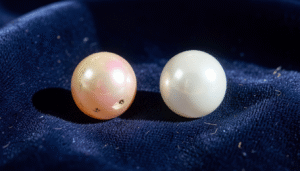
 The debate between Bahrain pearl vs freshwater pearl is one of the most frequently discussed topics among jewelry enthusiasts and buyers across the Gulf. Both types of pearls are beautiful, both are real, and both have a place in the jewelry market. However, they differ significantly in their origin, formation process, rarity, and value. Understanding these differences will help you make a more informed decision about which type of pearl represents the better investment for your personal goals and budget.
This guide breaks down the key differences between Bahrain pearls and freshwater pearls, examines what makes each type valuable, and provides practical guidance for buyers who want to make the most of their pearl jewelry investment.
The Origins: Where Each Pearl Comes From
Bahrain pearls are natural saltwater pearls formed in the Persian Gulf, specifically in the warm, shallow coastal waters surrounding the Kingdom of Bahrain. They grow inside the Pinctada radiata oyster without any human intervention. No seed or bead is inserted into the oyster. Instead, a tiny natural irritant, such as a parasite or a small piece of shell, triggers the oyster to secrete layers of nacre around it. Over many years, this nacre builds up into a pearl.
This natural, unassisted process is rare and takes a long time. Most Bahrain natural pearls take between five and fifteen years to form, which is why they are so scarce. The pearl diving tradition in Bahrain stretches back more than 4,000 years, and at its peak in the early twentieth century, Bahrain produced more than 80% of the world’s natural pearls. Today, natural pearl diving is rare, and the supply of genuine Bahrain natural pearls is very limited.
Freshwater pearls, by contrast, are grown in mussels that live in rivers, lakes, and ponds, primarily in China. They are almost exclusively cultured, meaning that a small piece of mantle tissue from a donor mussel is inserted into the host mussel to stimulate nacre production. Unlike saltwater cultured pearls, freshwater cultured pearls typically do not have a bead nucleus. Instead, the entire pearl is made of nacre, which is actually an advantage in terms of the pearl’s durability and luster.
China produces billions of freshwater cultured pearls every year, making them widely available and relatively affordable. Modern freshwater pearl farming has advanced significantly, and top-quality freshwater pearls can approach the luster and shape of higher-end cultured saltwater pearls, though they still cannot replicate the unique qualities of a genuine natural Bahrain pearl.
Comparing Quality: Luster, Nacre, and Shape
Luster is the most important quality factor in pearls. It refers to the depth and intensity of the light reflected from within and off the surface of the pearl. Luster is determined primarily by the thickness and quality of the nacre layers. Thick, well-formed nacre layers reflect light from multiple depths, creating a glowing, three-dimensional radiance. Thin nacre produces a surface shine that looks flat and chalky by comparison.
Bahrain natural pearls have the thickest nacre of any pearl type. Because they form entirely without human assistance over many years, every layer of nacre has formed naturally in response to the oyster’s biological processes. The nacre in a genuine Bahrain pearl may be 2 to 5 millimeters thick or more, compared to less than half a millimeter for many akoya cultured pearls. This nacre thickness is directly responsible for the extraordinary, warm, deep luster that makes Bahrain pearls so admired.
Freshwater cultured pearls, because they have no bead nucleus and are composed entirely of nacre, also have reasonably thick nacre. This gives them better luster than bead-nucleated cultured saltwater pearls, particularly the lower-quality varieties. However, the formation process in freshwater pearls is faster and more controlled than in natural Bahrain pearls, so the nacre layers are not as deeply integrated or as optically complex.
Shape is another area where the two types differ. Bahrain natural pearls almost never grow into perfect spheres. Natural formation creates slight irregularities that are actually signs of authenticity. Perfectly round natural pearls are extremely rare and command extraordinary prices. Most natural pearls are near-round, oval, or button-shaped. Freshwater cultured pearls, particularly modern varieties, can be grown in very consistent round shapes, which makes them popular for uniform strands.
Rarity and Market Value
The single greatest factor that separates Bahrain natural pearls from freshwater pearls in terms of value is rarity. Natural pearls are extraordinarily rare. Of every thousand oysters retrieved from the Persian Gulf, only a small fraction will contain a pearl of any quality. Of those, only a tiny number will be of sufficient quality, size, and shape to be used in fine jewelry. This natural scarcity is the primary driver of their price.
A single genuine Bahrain natural pearl of good quality and modest size can easily cost several thousand dollars. A high-quality natural pearl strand is a collector’s item valued at tens or even hundreds of thousands of dollars. These prices reflect not just the beauty of the pearl but the fact that it took years to form, required significant effort to locate, and is part of a diminishing supply that cannot be artificially increased.
Freshwater pearls occupy a completely different price tier. Basic freshwater pearl strands are available for as little as a few tens of dollars, making them accessible to buyers at virtually every budget level. Even premium freshwater pearls with excellent luster, round shapes, and large sizes are priced far below their natural pearl counterparts. A top-quality freshwater pearl strand that would retail for several hundred dollars represents remarkable value for the optical quality offered.
From a pure investment perspective, natural Bahrain pearls have historically held and increased their value over time, particularly as the natural pearl supply continues to shrink. They are tangible assets with a documented history of appreciation and cultural significance. Freshwater pearls, while beautiful, do not share this investment quality because they are produced in large quantities and their supply is essentially unlimited.
Identifying the Right Choice for Your Budget and Goals
Choosing between a Bahrain pearl and a freshwater pearl ultimately depends on what you want from your jewelry. If your goal is investment value, cultural significance, and owning a piece of natural history, a genuine Bahrain natural pearl is the clear choice, provided you have the budget and the willingness to invest in proper authentication and certification.
If your goal is to own beautiful, wearable pearl jewelry that you can use daily without anxiety about damage or loss, freshwater pearls are an excellent and smart choice. Modern freshwater pearls, especially the higher-quality varieties known as “near-hanadama” or “Edison” pearls, offer remarkable luster and size at a fraction of the cost of natural pearls. You can enjoy the elegance and femininity of pearl jewelry without the financial pressure of wearing something irreplaceable.
A practical middle-ground approach is to own both types for different purposes. A small, certified natural Bahrain pearl piece, such as a pendant or a single-pearl ring, serves as an investment and a special-occasion piece. A well-chosen freshwater pearl strand or set of necklaces for women serves as your everyday pearl option that you can wear freely and style with confidence.
Many women in Bahrain take this approach, treating their natural pearl pieces as heirlooms to be passed down through generations while using cultured and freshwater pearl pieces for regular wear. This strategy lets you enjoy the beauty of pearls at every level while building a meaningful collection over time.
How to Authenticate Before You Buy
Authentication is the critical step that separates a confident pearl purchase from a costly mistake. For natural Bahrain pearls, the only reliable authentication method is X-ray or other scientific testing by a certified gemological laboratory. The X-ray analysis reveals the internal structure of the pearl, which looks very different for natural, cultured, and imitation pearls. Natural pearls show concentric rings of nacre growth without any bead or nucleus.
The Bahrain Institute for Pearls and Gemstones (DANAT) is the official national body that certifies Bahrain natural pearls. A DANAT certificate is the gold standard for verifying that a pearl is genuinely natural and of Bahraini origin. If you are spending significant money on a natural pearl piece, a DANAT certificate is non-negotiable. Other reputable international laboratories such as GIA also test and certify natural pearls.
For freshwater pearls, certification is less critical because they are not priced at investment levels, but it is still worth buying from reputable sellers who can describe the pearl’s origin, treatment status, and quality accurately. Key things to ask about are whether the pearls have been bleached or dyed (common treatments that can affect long-term appearance), and whether they are coated with any surface treatment.
At Sohan Jewellers, all pearl jewelry is described accurately, with clear information about the type and quality of the pearls used. Whether you are looking for a piece featuring Bahraini natural pearls or a beautiful freshwater pearl design, you can browse the full range of necklaces for women with the confidence of dealing with a trusted retailer.
Long-Term Care for Maximum Value Retention
Whether you invest in a natural Bahrain pearl or a freshwater pearl piece, proper care is essential for preserving both its beauty and its value. Pearls are organic gems that are sensitive to chemicals, heat, and physical impact. A few consistent care habits will make a substantial difference in how well your pearls age.
Always put pearl jewelry on last, after applying perfume, hairspray, and cosmetics. The chemicals in these products, particularly alcohol-based ones, can erode nacre over time. Acids from perspiration can also dull the surface of pearls, so wiping them with a soft cloth after wearing them is a good habit to develop.
Store pearls in a breathable container such as a soft fabric pouch rather than an airtight box or plastic bag. Pearls need a small amount of moisture in the air to prevent the nacre from drying out and cracking. A fabric pouch in a drawer or a fabric-lined jewelry box is ideal. Never store pearls in a safe deposit box for long periods, as the very dry air in these environments can damage the nacre.
For investment-grade natural pearl pieces, have them appraised and photographed for insurance purposes. Given the significant value of genuine Bahrain natural pearls, insurance coverage is a wise protection. Update your appraisal every three to five years, as the value of natural pearls tends to increase over time and you want your coverage to reflect current market values.
The Bahrain pearl vs freshwater pearl question does not have a single right answer. Both types of pearls are genuine, beautiful, and worthy of a place in any jewelry collection. What separates them is their purpose and position within that collection. A genuine Bahrain natural pearl is a rare, historically significant gem with investment value that grows over time. A freshwater pearl is a beautifully accessible option that lets you wear and enjoy pearl jewelry every day. The best approach is to understand both, appreciate each for what it offers, and choose based on your goals, budget, and personal connection to these extraordinary natural gems. At Sohan Jewellers, you will find pearl jewelry at every level, from everyday freshwater pieces to exceptional natural pearl selections, all presented with the transparency and expertise that Bahraini jewelry shoppers deserve.