
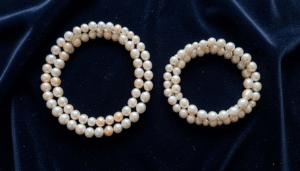
 Bahrain pearl jewelry has captivated the world for thousands of years, and its story is unlike any other gem in history. The Arabian Gulf, surrounding the island of Bahrain, once produced the finest natural pearls on earth. Merchants traveled from across Asia, Europe, and Africa to buy these precious gems. Today, Bahrain pearls still carry deep cultural significance, and wearing them connects you to a legacy of elegance that stretches back to ancient civilizations.
Whether you are buying your first pearl piece or adding to a growing collection, this guide covers everything you need to know. From the fascinating history of pearl diving to the different types of pearls available today, and practical tips for buying with confidence, you will find all the answers here. Sohan Jewellers proudly offers a curated selection of pearl jewelry for women who appreciate timeless beauty and authentic craftsmanship.
The Ancient History of Pearl Diving in Bahrain
Pearl diving in Bahrain dates back over 4,000 years. Ancient Dilmun, the civilization that flourished on this island, was already trading pearls with Mesopotamia and the Indus Valley. Archaeologists have found pearl shells in burial sites across Bahrain, confirming that these gems held both economic and spiritual value.
By the 19th century, Bahrain had become the pearl capital of the world. Thousands of men worked as divers during the summer diving season, called “ghaus.” They plunged to depths of 30 to 40 meters without breathing equipment, relying on breath control and a nose clip called a “fitam.” The entire economy of the island revolved around this single industry.
The pearl trade supported entire families and funded the construction of mosques, schools, and merchant palaces. European royalty and Indian maharajas wore Bahraini pearls as a symbol of supreme status. The most valuable pearls, called “dana,” were perfectly round, large, and had a lustrous glow that craftsmen described as “orient.”
The discovery of oil in the 1930s shifted Bahrain’s economy, but the pearl diving tradition was never forgotten. UNESCO inscribed Bahrain’s pearl diving heritage on its list of Intangible Cultural Heritage of Humanity in 2012. This recognition confirmed what Bahrainis already knew: their pearl legacy is a gift to the entire world.
Today, a walk through Muharraq, the old pearling district, still takes you past restored merchant houses and the ancient trading routes that pearl merchants once traveled. The Bahrain Pearling Trail is a UNESCO World Heritage Site, and it tells the story of generations of brave divers who shaped an island’s identity.
Types of Pearls You Will Find in Bahrain Today
When you shop for pearl jewelry in Bahrain, you encounter several distinct types. Understanding the differences helps you choose a piece that fits your taste, budget, and occasion.
Natural pearls form without any human intervention when an irritant enters a mollusk and the animal coats it with nacre (NAY-ker), the shiny substance that gives pearls their glow. True Bahraini natural pearls are extremely rare and very expensive. If you find one, you are holding a piece of living history.
Cultured pearls are grown with human assistance. A technician places a small bead inside the mollusk to trigger nacre production. Akoya pearls from Japan are the most popular cultured variety for classic white pearl jewelry. Freshwater pearls from China offer excellent value at a lower price point. South Sea pearls from Australia and the Philippines are the largest and most luxurious of all cultured pearls.
Tahitian pearls, grown in French Polynesia, are famous for their dark colors, which range from deep black to peacock green and deep purple. These exotic pearls make a bold statement and suit women who prefer dramatic, distinctive jewelry.
Imitation pearls are made from glass, plastic, or shell and have no nacre at all. They look attractive at first glance but lack the depth, weight, and warmth of real pearls. A simple test: rub a real pearl gently against your teeth and it feels slightly gritty. An imitation pearl feels perfectly smooth.
How to Evaluate Pearl Quality
Pearl quality follows the same logic as diamond grading: several factors combine to determine value. Knowing these factors protects you from overpaying and helps you spot genuine quality.
Luster is the most important quality factor. High-luster pearls reflect light sharply, almost like a mirror. You should see a clear reflection of your face in a high-quality pearl. Dull, chalky pearls have poor luster and low value.
Surface quality refers to the blemishes on the pearl’s surface. Minor spots or ridges are normal in natural pearls. Heavily spotted or cracked pearls are worth less. Perfect surfaces are rare and command premium prices.
Shape matters for value but not always for beauty. Perfectly round pearls are the rarest and most expensive. Oval, drop, button, and baroque (irregular) shapes are all beautiful in their own way. Baroque pearls have a unique organic look that many women prefer for modern, artistic jewelry designs.
Size is measured in millimeters. Larger pearls take longer to form and are less common, so they cost more. For classic pearl necklaces and earrings, pearls between 7mm and 9mm are considered standard. South Sea pearls can reach 18mm or more.
Color encompasses both the body color (white, cream, golden, black) and the overtone (the secondary color that floats on the surface). Rose overtones add warmth to white pearls. Green overtones add depth to Tahitian pearls. The overtone is a sign of nacre thickness and quality.
The Most Popular Pearl Jewelry Styles for Women
Pearl necklaces remain the most classic choice. A single-strand necklace with matched pearls is appropriate for every occasion, from formal weddings to casual lunches. Multi-strand necklaces create a bolder, more luxurious look that suits evening events and celebrations. Sohan Jewellers offers pearl necklaces for women in both classic and contemporary designs to suit every style.
Pearl earrings are the easiest way to add elegance to any outfit. Simple pearl stud earrings work for daily wear, while drop earrings with pearls and gold accents dress up an evening look instantly. Hoop earrings with pearl detailing are a modern hybrid style that bridges casual and formal.
Pearl rings are growing in popularity as engagement rings and fashion statements. A pearl center stone surrounded by diamonds creates a romantic, vintage-inspired look. Pearl cocktail rings with large baroque pearls make an artistic statement.
Pearl bracelets and bangles complete a jewelry set beautifully. A delicate pearl bracelet adds grace to the wrist without overpowering other jewelry. For Gulf weddings and formal celebrations, pearl bracelets for women with gold clasps are a beloved choice that honors regional tradition.
Smart Buying Tips for Pearl Jewelry in Bahrain
Always buy from a trusted jeweler who can tell you exactly what type of pearl you are purchasing. Ask for written documentation that confirms whether the pearl is natural, cultured, or imitation. Reputable shops in Bahrain, including Sohan Jewellers, provide honest information about every piece.
Examine the jewelry in good lighting. Natural light shows the true luster and color of pearls better than fluorescent store lighting. If possible, hold the piece near a window to see the overtone clearly.
Check the setting carefully. Pearl jewelry set in 18-karat gold or higher is more valuable than silver settings. The drill hole in a strung pearl should be clean and centered. A crooked drill hole suggests poor craftsmanship.
For pearl necklaces, check the knotting between each pearl. Traditional pearl necklaces have a small knot between each pearl to prevent them from rubbing against each other and to stop all the pearls from scattering if the thread breaks. Missing knots are a sign of rushed craftsmanship.
Store pearls properly after purchase. Keep them in a soft cloth pouch or a jewelry box lined with silk. Never store pearls with metal jewelry that can scratch them. Clean pearls with a soft damp cloth after wearing them, as perspiration and cosmetics can dull the surface over time.
Caring for Your Pearl Jewelry
Pearls are organic gems, meaning they come from living creatures. They are softer than diamonds or sapphires and need gentler care. A pearl rates 2.5 to 4.5 on the Mohs hardness scale (a standard measure of mineral hardness), which means it scratches more easily than most stones.
Put your pearl jewelry on last when dressing, after applying perfume, hairspray, and makeup. Chemicals in beauty products attack nacre and cause the surface to peel or lose its luster. The old rule “pearls last on, first off” remains the best advice.
Have pearl necklaces restrung every two to three years if worn regularly. The thread absorbs moisture and stretches over time, which weakens the knotting and puts stress on the drill holes. A professional jeweler can restring the necklace with fresh silk thread quickly and affordably.
Avoid exposing pearls to chlorine (in swimming pools), saltwater, and household cleaning products. Even soaking in tap water for extended periods can weaken the adhesive that holds pearls in their settings.
Bahrain pearl jewelry is more than an accessory. It is a connection to a civilization that built its greatness on the ocean floor. Every pearl carries the story of a diver who held his breath, descended into dark water, and returned with a gift from the sea. When you wear Bahraini pearl jewelry, you carry that story with you. Sohan Jewellers is honored to help you find the piece that speaks to you and keep that tradition alive for generations to come.