
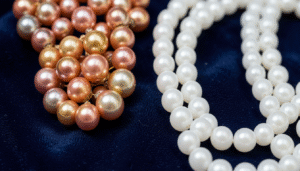
 Natural vs. cultured pearls is a topic with deep personal significance in Bahrain, a country with one of the world’s most celebrated pearl diving histories. For centuries, the Arabian Gulf was the world’s premier source of natural pearls, and Bahrain’s identity is woven into that heritage. Understanding the difference between natural and cultured pearls helps you make a smarter buying decision and appreciate the cultural value of what you are wearing. At Sohan Jewellers, we believe every jewelry lover in Bahrain deserves clear, honest information about pearls before they invest.
This guide explains how each type of pearl forms, what makes them different in quality and value, and how to choose between them based on your budget, your taste, and the occasion you are dressing for.
How Natural Pearls Form
A natural pearl forms when an irritant, typically a tiny parasite or fragment of shell, finds its way inside a wild oyster. The oyster responds to this intrusion by secreting nacre, which is a combination of calcium carbonate crystals and organic proteins, around the irritant. Over years and sometimes decades, layer upon layer of nacre builds up to create a pearl. Because this process is entirely unplanned and dependent on wild conditions, perfectly formed natural pearls are extraordinarily rare.
In Bahrain’s history, pearl divers would descend to the sea bed without any breathing equipment, relying on a weighted rope and a net bag to collect as many oysters as possible in a single breath. The oysters were then opened on board the ship, and perhaps only one in a thousand would contain a pearl. Of those, only a fraction would be round, large, and lustrous enough to be considered valuable.
This rarity is precisely what makes natural pearls among the most expensive gems in the world today. Bahraini natural pearls, with their particular luster and warm rose overtone, are considered especially desirable by collectors and auction houses globally. A genuine strand of natural Bahraini pearls can sell for tens of thousands of dollars or more, depending on size, shape, and quality.
The word ‘natural’ in pearls means no human intervention in the formation process. The pearl grows entirely on its own terms, in its own time, inside a wild oyster in the sea. This is categorically different from imitation pearls, which are simply glass or plastic beads coated to look like pearls and have almost no value.
How Cultured Pearls Form
Cultured pearls use the same biological process as natural pearls, but with one key human intervention. A pearl technician, sometimes called a nucleator, inserts a small shell bead called a nucleus into a live oyster or mussel. This nucleus, along with a small piece of mantle tissue from a donor oyster, triggers the nacre secretion process just as a natural irritant would.
The oyster is then returned to water, where it lives in a controlled farming environment for one to several years while nacre builds up around the nucleus. The nucleus gives the technician some control over the final size and, to a degree, the shape of the pearl. Rounds and near-rounds are more common in cultured pearls than in natural ones because the spherical nucleus encourages a more symmetrical nacre deposit.
Akoya cultured pearls, which come mainly from Japan and China, are the most common type in global jewelry markets. They are typically white to cream in color with a bright, mirror-like luster. South Sea cultured pearls, grown in Australia, Indonesia, and the Philippines, are larger and come in white, silver, and golden tones. Tahitian cultured pearls, from French Polynesia, are the famous black pearls with overtones of peacock green and aubergine.
Because the farming environment can be managed for water temperature, feeding, and disease, cultured pearl production is far more consistent than the entirely unpredictable natural pearl harvest. This consistency is what makes cultured pearls accessible to a wide range of buyers at a wide range of price points.
The Key Differences in Quality and Value
The most fundamental difference between natural and cultured pearls is nacre thickness. In a natural pearl, the entire pearl is nacre. In a cultured pearl, the pearl is mostly nucleus (the shell bead insert) with a layer of nacre on the outside. The thickness of that nacre layer varies by pearl type and the length of time the oyster was kept in the water before harvest.
Nacre thickness matters because it affects luster and durability. Pearls with thicker nacre layers have a deeper, more complex glow that seems to come from within the pearl rather than just reflecting off the surface. Thin nacre can look glassy or artificial and is more prone to peeling over time.
Luster is the single most important quality indicator when choosing any pearl, natural or cultured. Hold the pearl in good light and look for a bright, sharp reflection of your face or of the light source. A high-luster pearl gives a crisp, almost mirror-like reflection. A low-luster pearl looks milky, dull, or chalky by comparison.
Surface quality is the second quality factor to assess. Look for a smooth, even surface across the entire pearl. Minor imperfections are acceptable and actually confirm that the pearl is genuine rather than imitation. Major blemishes, cracks, or spotty areas reduce the pearl’s grade and long-term durability.
Shape is a third quality factor. Round pearls are the rarest and most valuable shape. Near-round, oval, baroque (irregular), and keshi (flat or petal-shaped) pearls are less rare and typically less expensive. However, baroque and keshi pearls have gained significant popularity in contemporary jewelry design because their organic shapes feel fresh and sculptural.
Spotting Genuine Pearls from Imitations
Before investing in pearl jewelry in Bahrain, it is useful to know the basic tests that distinguish genuine pearls from imitations.
The tooth test is the most well-known method. Rub the pearl gently against the edge of your front tooth. A genuine pearl, whether natural or cultured, will feel slightly gritty or sandy because of the crystalline structure of the nacre. An imitation pearl made of glass or plastic will feel perfectly smooth, even slippery.
The magnification test reveals the surface of the pearl at close range. Under a jeweler’s loupe or magnifying glass, genuine pearls show a grainy, scale-like texture because of the way nacre layers overlap. Imitation pearls look uniform and featureless at close range, sometimes showing brush marks from the coating process.
Weight is another clue. Genuine pearls feel heavier for their size than most imitation pearls. Glass imitations are the exception, as glass is quite dense, but plastic imitations feel noticeably lighter than genuine pieces.
The most reliable way to verify a pearl is to purchase from a reputable jeweler who provides documentation of the pearl’s origin. Sohan Jewellers provides certificates of authenticity for all pearl jewelry and can explain the source and quality grade of any piece in our collection.
Choosing Between Natural and Cultured Pearls for Jewelry in Bahrain
For most buyers in Bahrain, cultured pearls are the practical and beautiful choice. They offer genuine pearl quality at a price point that makes sense for regular wear, gifts, and everyday elegance. A well-chosen strand of Akoya cultured pearls or a South Sea cultured pearl pendant is a valuable piece that will last decades with proper care.
Natural Bahraini pearls are in a different category entirely. They are collector’s items and heirlooms. If you have the budget and the interest, owning a piece of genuine Bahraini natural pearl jewelry connects you directly to the country’s historical identity. These pieces are also sound investments, as natural pearl prices have risen consistently as supply decreases and demand from international collectors grows.
For gifting, cultured pearls are usually the better choice because they offer more variety in size, color, and price range. You can find cultured pearl earrings to suit most budgets, making them an excellent gift for mothers, daughters, and friends. Natural pearls as gifts are appropriate only for very significant occasions where the investment truly matches the moment.
Consider the style of jewelry you are choosing as well. Pearl earrings and pendants are among the most versatile jewelry choices a woman can make. Earrings for women featuring cultured pearl drops complement both traditional Gulf outfits and contemporary Western styles, which is why they remain consistently popular at Sohan Jewellers.
Caring for Your Pearl Jewelry
Pearls are organic gems, which means they require slightly more care than diamonds or gold. Because they are formed from calcium carbonate, they are sensitive to acids, chemicals, and even the oils in human skin over long periods.
The golden rule for pearl care is last on, first off. Put your pearls on after you have finished applying makeup, perfume, and hairspray. Remove them before cooking, cleaning, or exercising. Sweat and chemicals from cosmetic products gradually dull the nacre surface over time.
Clean your pearls after every wear using a soft, damp cloth. Wipe each pearl gently to remove surface oils and any residue. Allow the pearls to dry fully before storing them. Never use ultrasonic cleaners, steam cleaners, or chemical jewelry cleaning solutions on pearls, as all of these can damage or dissolve the nacre.
Store pearls separately from other jewelry to prevent harder stones and metal settings from scratching the nacre surface. A soft cloth pouch or a fabric-lined box compartment is ideal. Avoid storing pearls in airtight containers for long periods, as nacre benefits from slight humidity. A dry airtight environment can cause nacre to crack over time.
Strands of pearl should be restrung every two to three years if worn regularly. The silk thread used to string pearls stretches with wear and can eventually break. Knots between each pearl ensure that if the string breaks, you do not lose more than one pearl at a time. Sohan Jewellers offers pearl restringing as part of our jewelry care services.
Understanding the difference between natural and cultured pearls gives you the knowledge to shop with confidence and to appreciate what you own more deeply. In Bahrain, where pearls are part of the national story, wearing pearl jewelry is always more than a fashion choice. Whether you choose a natural Bahraini pearl as a heritage investment or a beautifully lustrous strand of cultured South Sea pearls for everyday elegance, Sohan Jewellers is here to help you find the right piece at the right value. Visit us to explore our full pearl jewelry collection and speak with our experts about which pearl suits you best