
 Knowing how to store and maintain your necklaces the right way can mean the difference between jewelry that lasts for decades and pieces that tangle, tarnish, or break far too soon. A beautiful necklace is an investment, whether it is a fine gold chain, a pearl strand, or a diamond pendant. Protecting that investment is simple once you understand the basics of jewelry care. At Sohan Jewellers, we want every piece you own to look as stunning years from now as it does the day you bring it home.
Many women own necklaces they rarely wear simply because they are tangled or damaged. Others store all their jewelry in a single box where pieces scratch and tangle together constantly. A few simple changes to how you store and care for your necklaces will transform your relationship with your jewelry collection and make it easier to enjoy every piece you own.
Why Proper Storage Matters More Than You Think
Jewelry storage is about more than keeping things tidy. The way you store your necklaces directly affects their condition over time. Gold can scratch when it rubs against harder materials. Silver tarnishes quickly when exposed to air and moisture. Pearls dry out and lose their lustre if stored incorrectly. Delicate chains snap under tension when they are pulled apart after tangling. Every one of these problems is preventable with the right storage approach.
The most common mistake jewelry owners make is keeping all their necklaces in a single drawer or box without any separation. When necklaces pile on top of each other, chains interlock and form tight knots. Gemstones scratch softer metals. Delicate pendants get crushed under heavier pieces. The time you spend untangling and the money you spend repairing damage far outweigh the cost of a good storage solution.
Humidity is another major enemy of jewelry. A bathroom cabinet might seem like a convenient place to store your necklaces, but the steam from daily showers creates a humid environment that accelerates tarnishing in silver and gold alloys, and dries out organic gems like pearls and coral. The ideal storage location is cool, dry, and away from direct sunlight. A bedroom dresser or a dedicated jewelry armoire (a small cabinet designed specifically for jewelry) works perfectly.
Light exposure is also a concern for colored gemstones. Prolonged exposure to strong sunlight can fade the color of gems like amethyst, rose quartz, and aquamarine. This is a slow process that happens over years, but keeping your necklaces away from direct sun exposure protects them in the long run.
Good storage habits protect your jewelry from environmental damage, physical damage, and the frustration of dealing with tangled pieces. Investing in proper storage is one of the smartest things you can do to protect your jewelry collection.
The Best Storage Solutions for Necklaces
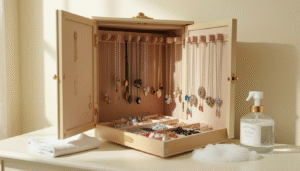
The best storage for necklaces keeps each piece separate, accessible, and protected. A jewelry armoire with individual hooks for hanging necklaces is the gold standard. Hanging necklaces keeps chains straight, prevents tangling, and makes it easy to see all your pieces at a glance. Many armoires come with a mirror on the inside of the door, which makes getting ready in the morning even more convenient.
If a full armoire is too large for your space, a wall-mounted jewelry organizer works equally well. These come in many styles, from rustic wooden frames with small hooks to sleek acrylic panels with slots for hanging multiple necklaces. Mounting one on the wall in your bedroom or dressing area keeps your necklaces visible and accessible while taking up no drawer or counter space.
For women who travel frequently, a jewelry roll is an essential tool. A jewelry roll is a soft fabric organizer that folds up compactly and ties closed. Individual padded compartments hold each necklace separately, and small zip pockets hold rings and earrings. A jewelry roll keeps your pieces safe in a suitcase without taking much space and eliminates the tangle problem that ruins so many travel experiences with jewelry.
Zip-lock bags work as an inexpensive solution for individual storage. Place each necklace in its own small zip-lock bag, squeeze out the air, and seal it. This prevents tangling, reduces tarnishing by limiting air exposure, and keeps pieces organized. You can label each bag or keep the bag inside the original jewelry box for easy identification. This method works especially well for silver pieces that tarnish quickly.
Jewelry boxes with individual compartments lined in soft fabric, usually velvet or microfiber, offer another excellent option. The soft lining protects metal surfaces from scratching, and the separate compartments keep pieces from touching each other. Look for boxes with a dedicated necklace section that includes individual slots or small hooks rather than an open area where everything sits together.
Cleaning Gold Necklaces at Home
Gold necklaces are relatively easy to clean at home with the right approach. The simplest method is warm water and a drop of mild dish soap. Fill a small bowl with warm water, add a small drop of dish soap, and place your gold necklace in the bowl. Let it soak for 15 to 20 minutes. Then use a soft toothbrush, a baby toothbrush works perfectly, to gently scrub the chain links and any settings. Rinse thoroughly under warm running water and pat dry with a soft, lint-free cloth.
Avoid hot water when cleaning gold, especially pieces with gemstone settings. Some stones are sensitive to heat and can crack or loosen. Warm water is always safer. Also avoid scrubbing too hard around prong settings, as vigorous scrubbing can loosen prongs over time and create the risk of losing a gemstone.
For heavily tarnished gold-plated necklaces, a gentle polishing cloth designed for jewelry works well. These cloths are treated with a mild polishing compound that removes tarnish without scratching. Rub the cloth gently along the chain and pendant, applying light pressure. Avoid using polishing cloths on pearls or porous gemstones, as the compound can damage their surfaces.
Ultrasonic cleaners, which use sound waves to vibrate dirt loose from jewelry, are effective but not suitable for all pieces. They work well for plain gold and diamond jewelry but can damage pearls, emeralds, opals, and other fragile or porous stones. If you use an ultrasonic cleaner at home, always check whether your specific gemstones are safe for this method before proceeding.
After cleaning, store your gold necklaces for women properly right away. Leaving them on a damp cloth or in a humid area after cleaning defeats the purpose of the process. Dry thoroughly, then hang or place in a clean, dry storage spot.
Cleaning and Caring for Pearl Necklaces
Pearl necklaces need special care because pearls are organic gems with a relatively soft, porous surface. The nacre (the layered material that forms a pearl’s surface, pronounced NAY-ker) can be damaged by harsh chemicals, abrasives, and even prolonged contact with human sweat and skin oils. Proper care keeps pearls lustrous and beautiful for generations.
The most important rule for pearl care is to wipe your pearl necklace with a soft, damp cloth after every wear. This removes sweat, skin oils, and cosmetic residue before it can build up and dull the nacre. Use a cloth that is just barely damp, not wet, and wipe each pearl gently. Then lay the necklace flat on a dry cloth to air dry completely before storing it.
Never soak pearl necklaces in water. The silk thread traditionally used to string pearls absorbs water and weakens over time if repeatedly soaked. Waterlogged silk thread is more likely to break, and the moisture can also loosen the knots between pearls that keep them from rubbing together and scratching each other. Clean pearls by wiping, not soaking.
Keep pearls away from all chemicals. Perfume, hairspray, lotions, and cleaning products all damage pearl surfaces. The golden rule of pearl jewelry is to put it on last after you have finished your makeup, perfume, and hair. Remove it first before you wash your hands or get ready for bed. The fewer chemicals and the less moisture the pearls encounter, the better.
Have your pearl necklace restrung by a professional jeweler every few years, depending on how often you wear it. The silk thread between pearls stretches and weakens with time and wear. A professional restringing uses fresh silk thread with individual knots between each pearl, ensuring that if the thread breaks, you only lose one pearl rather than the whole necklace scattering across the floor.
Preventing and Untangling Knotted Chains
Tangled chains are a universal frustration for jewelry lovers. Prevention is always better than cure. The single most effective prevention technique is the straw method: thread a delicate necklace through a short drinking straw before storing it. The straw holds the chain straight and prevents it from tangling with other pieces in storage. This simple trick saves enormous time and frustration.
Hanging necklaces on individual hooks, as mentioned in the storage section, is the most reliable long-term solution. When necklaces hang freely, they cannot tangle with each other. Even a simple row of small Command hooks on the inside of a cabinet door or on a wall creates an effective hanging display that keeps chains tangle-free.
When a chain does become tangled, patience and the right tools make the process much easier. Do not pull at a tangle. Pulling tightens the knot and can stretch or break a delicate chain. Instead, lay the necklace flat on a clean, smooth surface under good light. Use two straight pins or the tips of two fine sewing needles to gently work into the knot and loosen individual loops. Work slowly and methodically, releasing one loop at a time.
A small drop of baby oil or olive oil applied to a tight knot can help loosen it. The oil reduces friction between the chain links, making it easier to separate them. Apply the oil with a pin, work the knot gently, then wipe the chain clean with a soft cloth once it is untangled. This method works remarkably well on fine gold and silver chains.
If a chain is extremely tangled or if you are concerned about damaging it, bring it to a professional jeweler. Most jewelers can untangle even a very tight knot quickly with the right tools and experience. It is always better to seek professional help than to risk breaking a cherished piece by forcing a knot apart.
When to Visit a Professional Jeweler
Home care handles the majority of jewelry maintenance, but some tasks require a professional jeweler’s skill and tools. Knowing when to seek professional help protects your jewelry and ensures it stays in the best possible condition for the long term.
If a clasp is loose, sticky, or broken, have it repaired as soon as possible. A faulty clasp is the most common cause of lost necklaces. A jewelry repair professional can replace a clasp quickly and inexpensively, saving you the heartache of losing a treasured piece. Check your clasps periodically by testing them a few times before wearing a necklace.
Prong settings that hold gemstones should be inspected every one to two years. Prongs are small metal claws that grip a gemstone in place. They wear down with regular use and can eventually become too thin to hold the stone securely. A jeweler can check prong condition and re-tip (add metal to) worn prongs before a gemstone falls out.
Professional cleaning, either ultrasonic or steam cleaning, removes buildup from difficult-to-reach areas of complex settings that home cleaning cannot address. An annual professional clean and inspection keeps your jewelry looking its very best and catches any maintenance issues before they become serious problems.
Sohan Jewellers is always available to help with maintenance questions, repairs, and cleaning advice for any pieces purchased from our collection. Our team cares about your jewelry as much as you do, and we are here to help your favorite pieces last a lifetime.
Proper storage and maintenance are the simplest and most effective ways to protect your jewelry investment. By keeping your necklaces separate and well-supported, cleaning them gently and regularly, and addressing repairs promptly, you ensure that every piece in your collection stays beautiful for years and even decades to come. Your jewelry carries memories and meaning that deserve to be preserved. Treat your necklaces well, and they will reward you with a lifetime of beauty.
Visit Sohan Jewellers for advice on caring for your specific pieces and to explore our full range of fine necklace styles.